
How Engineered Stone Transformed My Home: A Personal Journey
Have you ever looked at your kitchen benchtops and felt that familiar pang of disappointment? I certainly did—especially when I started exploring engineered stone as a way to refresh my outdated kitchen without committing to a full renovation. Like many homeowners, I wanted a modern, durable surface that could transform the space without turning my home into a construction zone.
My kitchen had served me well for years, but those tired laminate benchtops were dragging the whole room down. They’d seen better days—stained, chipped, and frankly, just plain dated. I knew something had to change, but the thought of ripping everything out felt overwhelming. That’s when I stumbled upon stone overlay benchtops made with engineered stone, and honestly, it’s been one of the best home improvement decisions I’ve ever made.
In this post, I’ll share my personal journey from tired laminate to stunning engineered stone. You’ll discover what a stone benchtop overlay actually is, how much you can expect to pay for kitchen benchtop overlay cost in Australia, and whether this option might be right for your home. Plus, I’ll walk you through the installation process, the practical benefits I’ve experienced, and my honest verdict on whether I’d recommend this approach to others.
What Is a Stone Benchtop Overlay?
A stone benchtop overlay is essentially a thin layer of engineered stone that gets fitted directly over your existing benchtops. Think of it as giving your kitchen a facelift rather than performing major surgery. The overlay typically ranges from 6mm to 12mm thick, making it lightweight enough to sit on top of your current surfaces without needing structural modifications.
How Stone Overlay Benchtops Differ from Full Replacement
The main difference between a stone overlay benchtop and a full replacement comes down to scale. With a complete replacement, tradies remove your existing benchtops entirely, which often means disconnecting plumbing, removing sinks, and potentially damaging surrounding cabinetry. It’s messy, time-consuming, and expensive.
With an overlay, your existing benchtop stays put. The thin stone layer is precisely cut to fit over the top, creating that luxurious stone appearance without the demolition drama. It’s faster, cleaner, and considerably more affordable.
What Materials Are Used in Benchtop Stone Overlay?
Most benchtop stone overlay products use engineered quartz or similar composite materials. These typically contain around 90-95% natural quartz combined with resins and pigments. The result is a surface that’s incredibly durable, non-porous, and available in a wide range of colours and patterns. Some suppliers also offer natural stone options, though engineered varieties tend to be more popular due to their consistency and lower maintenance requirements.
My Decision-Making Process: Why I Chose Stone Overlay Benchtops
Choosing to upgrade my benchtops wasn’t a snap decision. I spent weeks researching options, getting quotes, and weighing up the pros and cons. Here’s what ultimately pushed me toward the overlay route.
The Problems with My Old Laminate Benchtops
My laminate surfaces had accumulated years of wear and tear. Hot pans had left scorch marks near the stovetop, knife cuts had created grooves where bacteria could hide, and the edges were peeling in several spots. Beyond the practical issues, they just looked tired and dated compared to the modern kitchens I’d been admiring on Instagram and Pinterest.
I wanted that sleek, sophisticated look you get with stone, but my budget didn’t stretch to a complete kitchen renovation. The idea of spending tens of thousands of dollars on new cabinetry and full-thickness stone benchtops simply wasn’t realistic.
Can You Put Stone Over Existing Benchtops?
This was my big question, and the answer is yes—provided your existing benchtops are structurally sound. The overlay process works best when your current surfaces are level, stable, and free from significant damage. During my consultation, the installer checked that my cabinets could support the additional weight (which is minimal) and confirmed that my laminate was in good enough condition to serve as a base.
Understanding Stone Overlay Benchtops Cost
Let’s talk money, because that’s often the deciding factor. The stone overlay benchtops cost was a major consideration in my decision-making process.
How Much Does a Kitchen Benchtop Overlay Cost in Australia?
In my experience, kitchen benchtop overlay cost in Australia typically ranges from $350 to $600 per square metre, including installation. My kitchen measured around 4 square metres, so I was looking at roughly $1,400 to $2,400 all up. This can vary depending on your location, the stone colour you choose, and the complexity of your layout.
What Factors Affect Stone Overlay Benchtops Cost?
Several factors influence the final price. Premium colours and patterns with more intricate veining generally cost more than solid options. Edge profiles also matter—a simple square edge is cheaper than a bullnose or bevelled finish. The number of cutouts required for sinks, cooktops, and tap holes adds to the labour costs as well.
Additionally, if your existing benchtops need any preparatory work or levelling, this can increase the overall stone overlay benchtops cost.
Is Stone Benchtop Overlay Cheaper Than Full Replacement?
Absolutely. A full stone benchtop replacement typically costs $800 to $1,500 per square metre, plus there’s the cost of removing and disposing of your old benchtops. Factor in potential plumbing disconnections and cabinet modifications, and you could easily be looking at double or triple the price of an overlay solution.
The Installation Experience: What to Expect
I’ll be honest—I was nervous about the installation process. Would it be disruptive? Would I be without a functioning kitchen for days? Here’s what actually happened.
How Long Does Stone Overlay Installation Take?
The entire installation took less than a day. The installers arrived around 8am with the pre-cut overlay pieces and were finished by mid-afternoon. Because everything had been precisely templated beforehand, the pieces fit beautifully with minimal adjustments needed on-site.
Do You Need to Remove Existing Benchtops for an Overlay?
Nope, and this was the real selling point for me. My existing laminate benchtops stayed exactly where they were. The installers simply cleaned the surface, applied a bonding agent, and carefully positioned the stone overlay on top.
Before and After: The Transformation of My Kitchen
The visual difference was genuinely stunning. Walking into my kitchen now feels completely different to how it did before.
Choosing the Right Colour and Finish
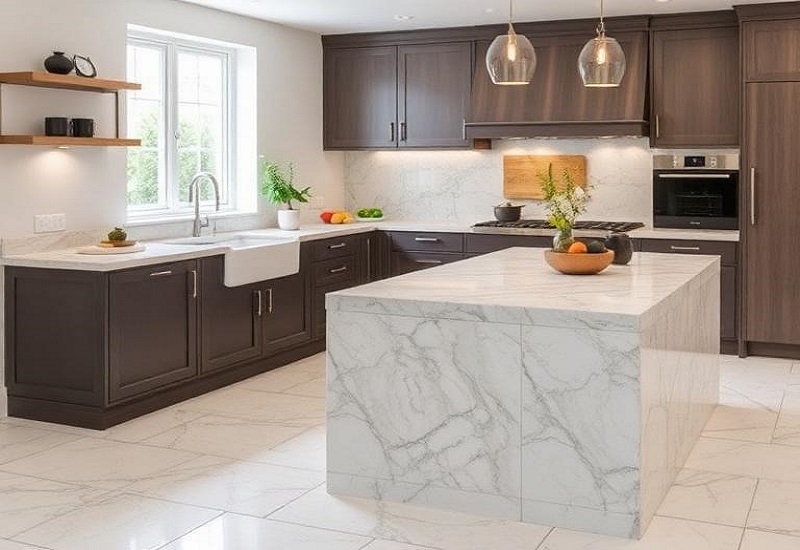
I spent ages agonising over colour choices. Eventually, I settled on a soft white with subtle grey veining—classic enough to stand the test of time but interesting enough to add character. The polished finish reflects light beautifully, making my kitchen feel brighter and more spacious.
How Stone Overlay Changed the Feel of My Home
What surprised me most was how this single change transformed not just my kitchen, but the entire feel of my home. The space suddenly felt more cohesive and modern. Friends who visited commented on how different the kitchen looked, often assuming I’d done a complete renovation.
The Practical Benefits I’ve Experienced
Beyond aesthetics, the practical benefits have been impressive.
Durability and Heat Resistance
I no longer panic when someone puts a hot pan down on the benchtop. The engineered stone handles heat far better than my old laminate ever did. It’s also remarkably scratch-resistant—I’ve been using it normally for over a year now, and there’s not a mark on it.
Is Stone Benchtop Overlay Easy to Maintain?
Incredibly easy. I simply wipe it down with warm soapy water, and it looks pristine. Because the surface is non-porous, it doesn’t stain or harbour bacteria like my old laminate did. No special sealants or treatments required.
Common Concerns and How I Overcame Them
I had plenty of worries before committing to this project. Here’s how those concerns played out in reality.
Are Stone Overlay Benchtops as Durable as Solid Stone?
While overlay benchtops are thinner than full-thickness stone, they’re made from the same engineered quartz material. In everyday use, I haven’t noticed any difference in durability. The overlay sits firmly bonded to the substrate beneath, giving it excellent structural support.
What Happens if the Overlay Gets Damaged?
Damage to engineered stone is rare, but minor chips can usually be repaired by professionals. In a worst-case scenario, the overlay can be replaced without touching your cabinetry—another advantage over full-thickness installations.
Would I Recommend Stone Overlay Benchtops? My Final Verdict
After living with my stone benchtop overlay for over a year, I can confidently say it was money well spent. The transformation was dramatic, the installation was painless, and the ongoing maintenance has been minimal.
If you’re working with a limited budget but dreaming of that luxurious stone look, I’d strongly encourage you to explore the overlay option. It delivers stunning results at a fraction of the cost of a full replacement. Just make sure your existing benchtops are structurally sound and choose a reputable installer who specialises in engineered stone in Dandenong to ensure accurate templating and professional installation.
So, is a benchtop stone overlay right for you? If you want maximum impact with minimal disruption—and your wallet will thank you too—then absolutely, yes. My only regret is not doing it sooner.
For more information, visit https://homeimprovementwow.com/
Very good i like it